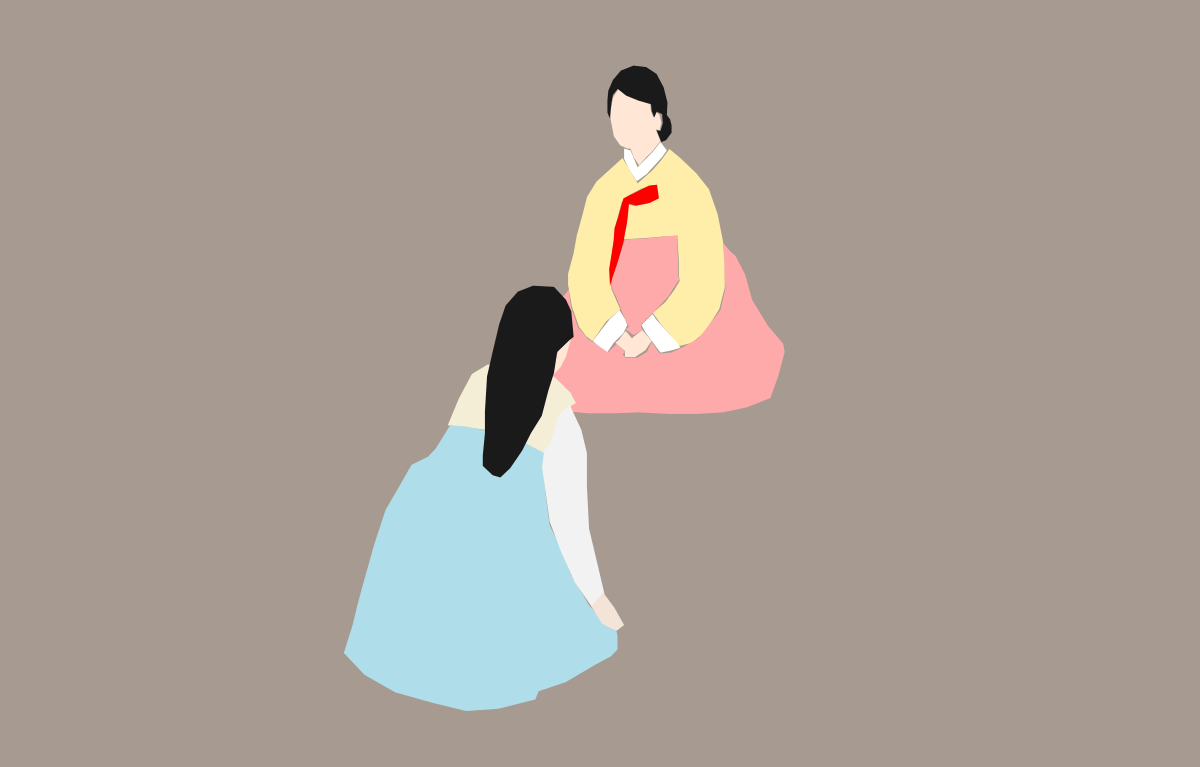
Project Overview
Created as part of the creative drawing task for Stanford's CS248A, the above artwork was drawn in SVG (Scalable Vector Graphics), using Inkscape Bézier curves, Sketch, Adobe Illustrator, and reference images. It was converted into discrete polygon meshes, which were then rendered into a raster image using a custom-built software rasterizer.
Technical Details
The rasterizer supports the following features:
- Generalized Line Drawing: Bresenham's algorithm for arbitrary slopes in all four quadrants using floating-point arithmetic.
- Triangle Drawing: Rasterizes triangles using 2D bounding box and triangle-edge rule.
- Anti-Aliasing using Supersampling (SSAA): Multi-rate sub-pixel sample buffers to eliminate jagged edges, using box or truncated Gaussian filter.
- Transforms & Hierarchical Modeling: Homogeneous coordinate matrix transformations supporting nested group hierarchies alongside interactive panning and zooming.
- Texturing & Sampling: Nearest-neighbor and bilinear texture filtering.
- Alpha Compositing: Alpha blending for rendering semi-transparent elements.
Behind The Piece
Motivation
This work is dedicated to my grandmother, who passed away while I was working on this project, during Lunar New Year in 2025. Unfortunately, I couldn't fly to Korea to say goodbye.
The drawing depicts a cherished childhood memory of mine during Lunar New Year (설날 / Seollal). In Korean tradition, families gather in traditional clothing (한복 / Hanbok) to perform 세배 (Sebae), a deep ceremonial bow to the elders, expressing gratitude and receiving warm blessings for the year ahead.
Story of my grandmother
Being unable to be there in person made me reflect for the first time on the sheer weight of history she carried.
Born during the Japanese colonization, she lived through the devastation of the Korean War and the heartache of losing her brothers. She would tell us about her childhood — albeit very rarely — and how she fled south alone.
The day after her passing, I pictured a little girl hiding in a barn, trembling, where she spent a night alone next to the dead body of a baby. She said she was even hiding from American soldiers, South Korea's allies, because it was simply not safe to get noticed as a young woman in such times. The horror of wars, something that goes untold in textbooks.
And the story of meeting my grandfather, who also fled South, and how he passed away when my father was young, raising the two sons by herself.
History, Religion, and Freedom
Global tragedies are not just chapters in history books; they leave deep, indelible marks on human lives that echo across generations, shaping my father's life and ultimately my own.
On New Year's Day, we bow to our ancestors. However, shortly after, we also pray to God and read the Bible together. At night, when it's hard to fall asleep, my parents listen to sermons of Buddhist monks on Youtube, and I, the ambient sound of temples.
I never realized that this, such ordinary scenery in Korea, may seem bizarre to some people.
However, with the context of history, how my grandmother was raised by Catholic nuns after the war, how my mom went to an all-girls Christian school, and how we seek comfort and connections to our culture in Buddhism and shamanism, it all makes sense.
Here I am today, in the United States, reminded of the vision that Kim Gu (김구) had, a leader of the Korean independence movement. He dreamed of a country where various religions and ideologies can freely coexist, and such a vision is now a reality. It's a reality in my very own life, yet one denied to my relatives in the North, whom I never met.
And now, 70 years after the war, these first-hand memories are slowly slipping away, finding their way into peace... only to be recounted and passed down by the generations to come.
"그러므로 어느 한 학설을 표준으로 하여서 국민의 사상을 속박하는 것은 어느 한 종교를 국교로 정하여서 국민의 신앙을 강제하는 것과 마찬가지로 옳지 아니한 일이다. 산에 한 가지 나무만 나지 아니하고 들에 한 가지 꽃만 피지 아니한다. 여러 가지 나무가 어울려서 위대한 삼림의 아름다움을 이루고 백 가지 꽃이 섞여 피어서 봄들의 풍성한 경치를 이루는 것이다. 우리가 세우는 나라에는 유교도 성하고 불교도, 예수교도 자유로 발달하고 또 철학으로 보더라도 인류의 위대한 사상이 다 들어와서 꽃이 피고 열매를 맺게 할 것이니 이러하고야만 비로소 자유의 나라라 할 것이요, 이러한 자유의 나라에서만 인류의 가장 크고 가장 높은 문화가 발생할 것이다."
"Therefore, to restrict the people's thoughts based on any single doctrine is as unjust as forcing a national religion upon their faith. A mountain does not grow only a single kind of tree, and a field does not bloom with only a single kind of flower. Various trees come together to create the magnificent beauty of a great forest, and a hundred varieties of flowers bloom together to shape the abundant scenery of a spring field. In the nation we build, Confucianism shall thrive, Buddhism and Christianity shall freely flourish, and through philosophy, all of humanity's greatest thoughts shall enter, bloom, and bear fruit. Only then can it truly be called a land of freedom, and only from such a land of freedom will humanity's greatest and highest culture arise."
— Kim Gu, My Wish (백범일지)
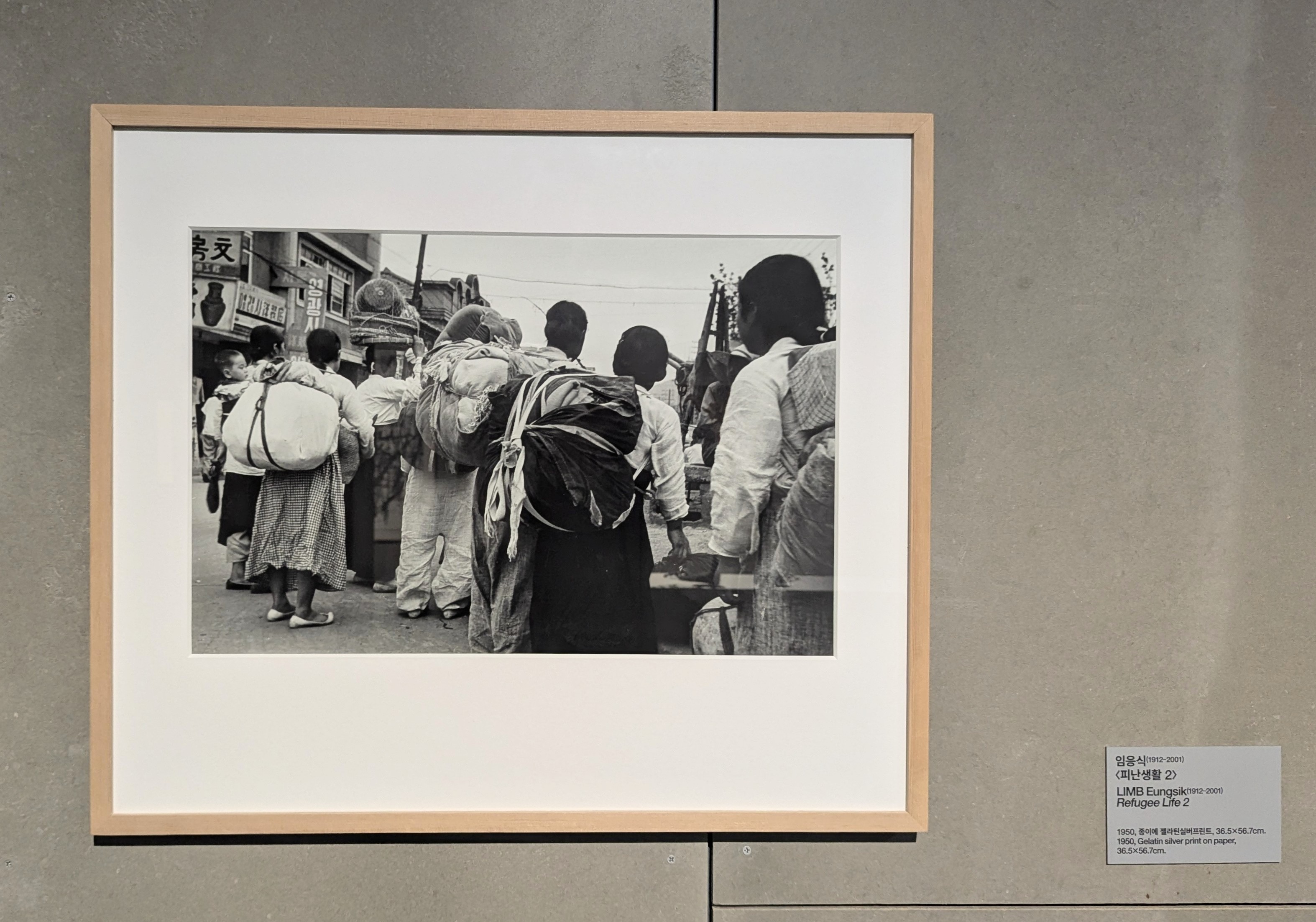
Photo taken at the National Museum of Modern and Contemporary Art (MMCA), Gwacheon